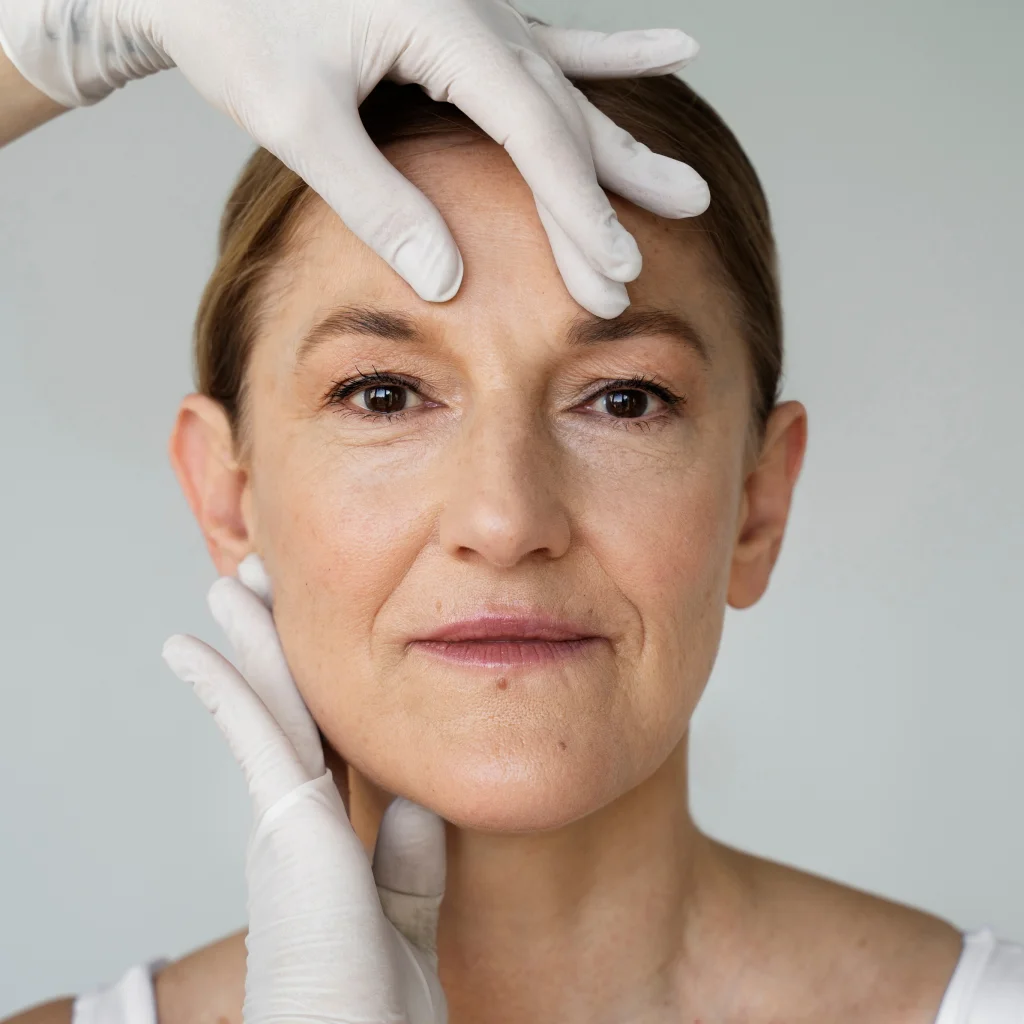
A high forehead or a hairline that sits too far back can throw the whole face out of balance — and for many people, especially women, it is a lifelong source of self-consciousness that no haircut truly fixes. The good news is that the proportions of the face can be changed. Two different procedures — forehead reduction surgery and hairline-lowering by transplant — can bring a high hairline forward and restore facial harmony. This guide explains how each works and which suits which person.
The short answer
A high hairline can be lowered in two ways: forehead reduction surgery, which surgically advances the hairline in one operation by removing a strip of forehead skin, or a hairline-lowering hair transplant, which builds a new, lower hairline follicle by follicle. Surgery gives an immediate change and works for suitable candidates with good scalp laxity; a transplant is more flexible in shaping and suits most people, maturing over about a year.
Why the hairline sits high
A high forehead can be entirely natural and genetic — some people are simply born with a higher hairline and larger forehead proportion. In others it develops from hairline recession over time, or it can follow previous cosmetic surgery. Whatever the cause, the effect is the same: the upper third of the face looks disproportionately large, which many people find ages or unbalances their appearance. Reshaping the hairline restores the classic proportions where the face divides roughly into equal thirds.
Option 1 — Forehead reduction surgery
Forehead reduction (also called hairline advancement) is a surgical procedure that moves the hairline forward in a single operation. A fine incision is made along the existing hairline, a measured strip of forehead skin is removed, and the hair-bearing scalp is advanced downward to meet it — instantly shortening the forehead. Because the change is immediate and does not depend on transplanted hair growing in, it appeals to people who want a one-step result. It suits candidates with sufficient scalp laxity (a flexible scalp that can be advanced) and a stable hairline, and the fine scar is placed right at the hairline where it is well hidden.
Option 2 — Hairline-lowering hair transplant
The alternative is to build a lower hairline with a transplant. Follicles from the permanent donor area are placed to create a new hairline in front of the existing one, designed at the height and shape that best fit the face. This approach is far more flexible in design — the surgeon can round out corners, lower the centre, rebuild receded temples and tailor density precisely — and it suits almost anyone with a healthy donor area, including those whose scalp is not lax enough for surgery. The trade-off is time: like any transplant, the result grows in over roughly 12 months rather than appearing at once. This is often the preferred route for women seeking a natural, feminine hairline — see hair transplants for women.
Which one is right for you?
The choice comes down to your anatomy and your goals. Scalp laxity, the amount you want to lower the hairline, whether the temples also need rebuilding, and your preference for an immediate result versus a gradual one all feed into the decision. Some people are better suited to one, some to the other, and occasionally the two are combined. The only way to know is a proper assessment by a surgeon who performs both and will recommend honestly rather than sell one procedure. As always, the surgeon’s judgement is the deciding factor — the same principle that governs choosing any hair restoration surgeon.
Dr. Sherif Hegazy’s take: “There is no single best way to lower a hairline — there is only the best way for your scalp and your goals. Surgery is faster; a transplant is more flexible in design. The right answer comes from examining you, not from a brochure.”
Frequently asked questions
Is forehead reduction permanent?
Yes — the hairline is advanced permanently, and any transplanted hairline hair is likewise permanent.
Which is better, surgery or transplant?
Neither is universally better. Surgery gives an immediate result for suitable candidates; a transplant offers more design flexibility and suits more people. It depends on your scalp and goals.
Will there be a visible scar?
With forehead reduction the fine scar sits right at the hairline and is well hidden; a transplant leaves only tiny dot marks.
Is this suitable for women?
Yes — hairline lowering is one of the most common requests from women, most often via the transplant route for a natural, feminine shape.
Find out which suits you
The right procedure depends on a proper examination. Book a consultation with Dr. Sherif Hegazy or explore the hair transplant service to discuss lowering your hairline.
This article is general information, not individual medical advice. Individual results vary.